
Sustainability
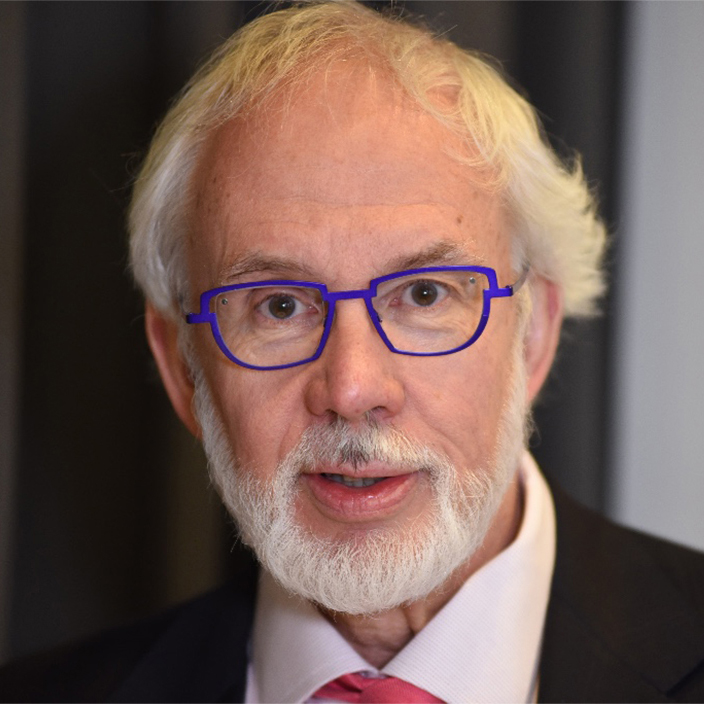
Tenured Harvard Business School professor, now at Oxford University.
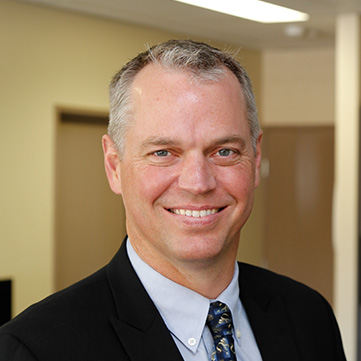
I’ve worked with Tony Calandro on several projects with clients of his who do work in sustainability. A few months ago he brought to my attention a webinar with John Pope, Founder and CEO of Carbon GeoCapture, titled “Coal Assisted Carbon Capture & Storage in Wyoming.” I found it absolutely fascinating. This is an example of a technology I think is foundational for dealing with climate change. It is also a highly politicized one as I’ve written about with Philip Rossetti of the R Street Institute. In short, conservatives who are focused on climate change (and they exist as shown in strong and emerging “Ecoright” (listen to this podcast of mine) of people and organizations) are supportive because they recognize its potential. Liberals, on the other hand, are less enthusiastic. Some of the reasons make sense to me, like challenges of cost and scaling. Some are purely ideological since they complain it would simply enable the fossil fuel industry to exist. Ironically, the International Energy Agency’s most optimist Net Zero Energy Emissions by 2050 Scenario relies heavily on carbon capture (and nuclear).
I asked Tony if John would be willing to do an interview with me and he kindly agreed. I learned a lot and I think you will too.
From Missouri to Nanotechnology
Bob Eccles: John, thanks for taking the time to talk to me! Let’s start at the beginning. Where were you born? What shaped you as a kid?
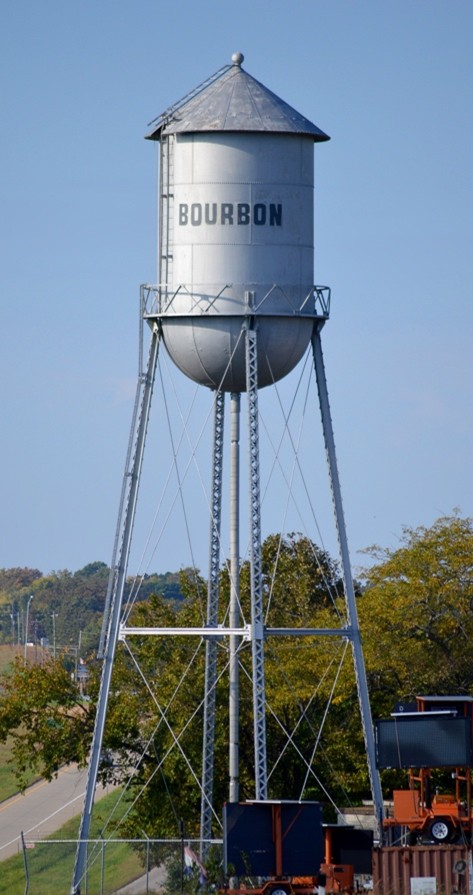
John Pope: I was born in Washington, Missouri, on Father’s Day. I grew up around St. Louis until my stepdad, a chiropractor, moved us out to a tiny town in the Ozarks – Bourbon, Missouri. I graduated from high school there with 36 people in my class.
Eccles: Wow, that’s a very small class, and if you don’t mind me saying so, kind of in the boondocks. And then came physics?
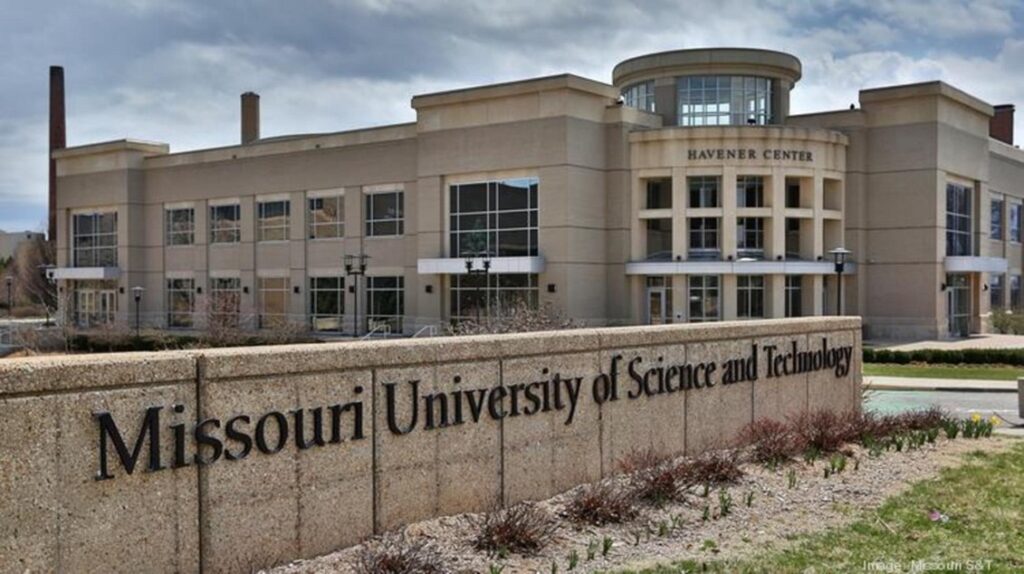
Pope: Fair enough about the geography but I got a great education and from there I went to University of Missouri-Rolla, now Missouri S&T, and got a physics degree. I picked physics because I didn’t know at 17 what I wanted to do for a career. I figured if I just did the hardest thing, everything else would be still be available when I figured it out.
Eccles: I’d say that’s pretty sophisticated thinking for a 17-year old! What did you do after you graduated?
Pope: I worked for a few years as a lab tech at a large company and then went to the University of Wyoming to study for a Ph.D. under Dan Buttry. He had built a world-class research group there. I picked a fundamental science project: assembling monolayers on electrodes and manipulating electric fields to observe changes in fluorescent colors in order to calculate the electric field magnitudes across them. Very nano, very cool. It forced me to learn everything from organic synthesis to spectroscopy.
Eccles: Sounds very cool indeed although I don’t pretend to understand everything you just told me. What did you do next?
Pope: I took an assistant professor job at Tokyo University of Agriculture and Technology in 1995. I helped lead a large group studying rechargeable lithium-ion battery cathodes, partnering with Matsushita (Panasonic). We used Raman spectroscopy to understand how the materials worked, and how to make them better.
Eccles: Tokyo is a long way from Bourbon, MO! Was it hard working as an American who didn’t speak Japanese?
Pope: Yes, many times, but most of my work was research and my colleagues were patient and kind, so that made it easier. My only class was teaching students how to pronounce chemical terms like “Xenon” in English, so conveniently I taught the entire class in English.
First Companies
Eccles: What did you do when you came back to the U.S.?
Pope: By 1997, I’d worked in both large companies and large academic groups. I realized that I wanted to work in an environment where I could move at my own pace and do the things that I think are right. So, I decided to take a stab at entrepreneurship.
I started my first company, Blue Sky Batteries, in 1998 back in Laramie, Wyoming because I had many friends and colleagues there to support me. It was focused on advancing rechargeable battery tech, something I’d worked on in Japan. I borrowed $100 to incorporate it, wrote a bunch of Small Business Innovation Research (SBIR) grants, scraped together funding, and started to build. Eventually, we created Blue Sky Group, an umbrella company with multiple startups underneath: batteries, fuel cells, reclaimed wood. At one point, we had 12 businesses going.
Eccles: I’m no entrepreneur but that sounds like a lot to me. Didn’t you feel like you had to focus at some point?
The Birth of WellDog
Pope: Yes, when 9/11 happened. That changed everything for us. We had to consolidate and survive. So, I reluctantly stopped working on rechargeable battery materials and focused on the company that was closest to commercial revenues, WellDog. WellDog involved developing a better sensor for measuring methane dissolved in water in harsh environments. My geophysicist uncle needed a sensor to detect methane in the deep ocean, specifically from gas hydrate mounds on the seafloor. So, we built a Raman spectrometer that could detect methane in water, accurately, at depth.
Eccles: Mind giving me a quick explanation of gas hydrate mounds and why your uncle wanted to do this?
Pope: Methane gas hydrates are the largest known source of hydrocarbons in the world. They also present safety hazards to seafloor structures. Studying them and how they act under various conditions used to be interesting and useful. Now it’s critical, since they also represent a potential tipping point in climate change.
But the ocean is far from Wyoming. At the time people were drilling thousands of wells into deep coal seams north of us in Wyoming and producing a lot of water, trying to release methane (natural gas) from those coal seams. We wanted to help them be more sustainable, to avoid unnecessary water production, so we started lowering the sensor into their wells and telling them where the methane was. We founded WellDog to do that work.

Eccles: How did it go?
Pope: We raised the first venture capital in the history of Wyoming and commercialized our approach to find natural gas sweet spots in deep coal seams, eventually testing hundreds of wells around the US and Canada. Along the way, we measured naturally occurring CO2 in some wells, which was exciting because no other sensor could measure it.
That got me thinking about how we could use coal seams as carbon sinks. It also helped me see more good things that WellDog could do.
But in 2008 the global financial crisis killed the coalbed methane industry and the company. I thought it was just too critical to mitigating climate change, though, to let the Raman sensor go into the bankruptcy trash bin. And so we mortgaged everything we had and bought the assets. We took WellDog to Australia and built it into #88 on the Inc. 500 list over the next five years.
Then the company was again disrupted by a few of our investors in 2017. We had to mortgage and sell everything again so that we could protect the core intellectual property and preserve the carbon sensing capability.
Eccles: I have to honestly say I’m impressed with your courage and commitment. But it isn’t clear to me where your interest in climate came from to lead you to focusing on these types of technologies.
A Long Time Coming: Carbon GeoCapture
Pope: I think it started with my uncle telling me when I was a kid “Hey, climate is a going to be a big deal in your lifetime.” And when I realized how critical the Raman sensing capability was this prompted me to do everything I could to keep that going. Later, when people occasionally asked WellDog to try to find CO2 that they had put into coal seams, it helped me realize that we could watch Mother Nature and learn how to do it better.
But the primary trigger was the 2013 United Nations International Panel on Climate Change report which made it clear that we were already way behind in reducing carbon emissions. The report also made it clear that underground CO₂ storage is the only sink that has the volume to handle the immense amount of CO2 that we need to put away in even the best case of carbon reduction emissions.
Eccles: So that was the origin of Carbon GeoCapture?
Pope: 2013 was the moment I realized we couldn’t wait for society to get serious about climate change. We had to develop and scale the technology before it became urgent. Because when it gets urgent, it’s already too late, given the typical 10- to 20-year development cycle required for technologies. So, that’s when we decided to go all in. We sold our reclaimed wood business and started Carbon GeoCapture (CGC) in 2016.
Eccles: I don’t know your political orientation, but I just have to say I’m impressed that a tech guy living in coal-country Wyoming was working on climate change in the very early days. I wish the liberal community focused on climate change would open up its mind a bit to the kind of work you and others are doing that has a technology focus instead of the inane and unproductive “divest fossil fuels” focus. So please tell me more about CGC’s approach and where it fits in the broader carbon capture ecosystem.
CGC’s Breakthrough: Cost-Effective Carbon Capture and Sequestration
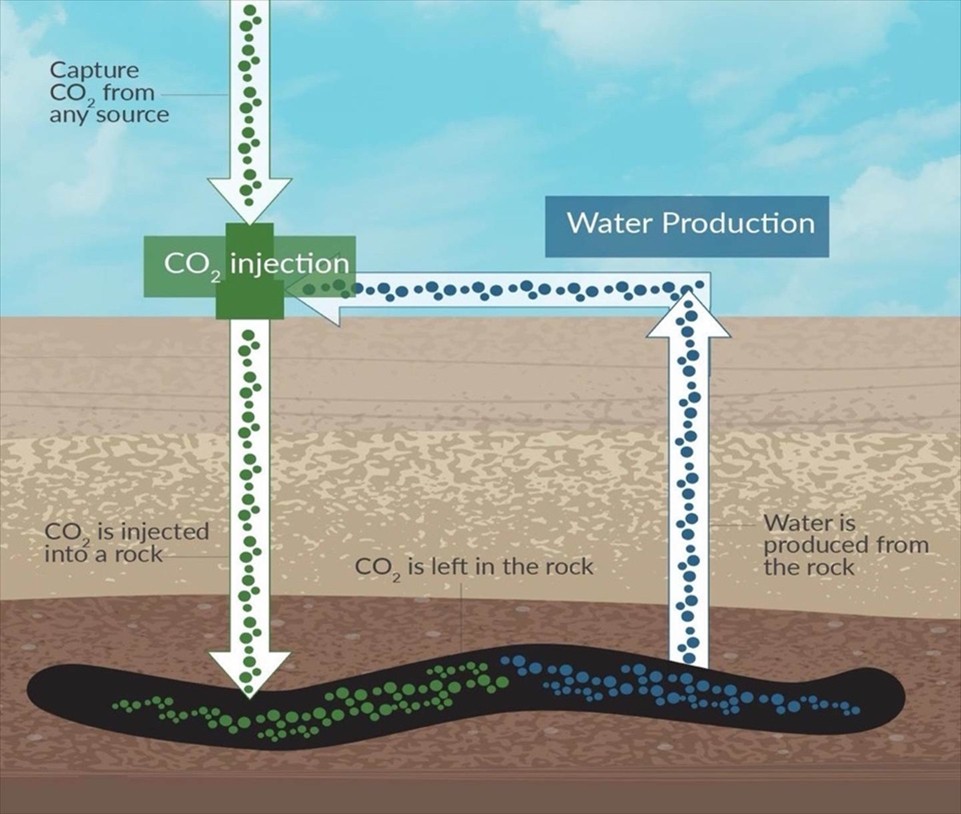
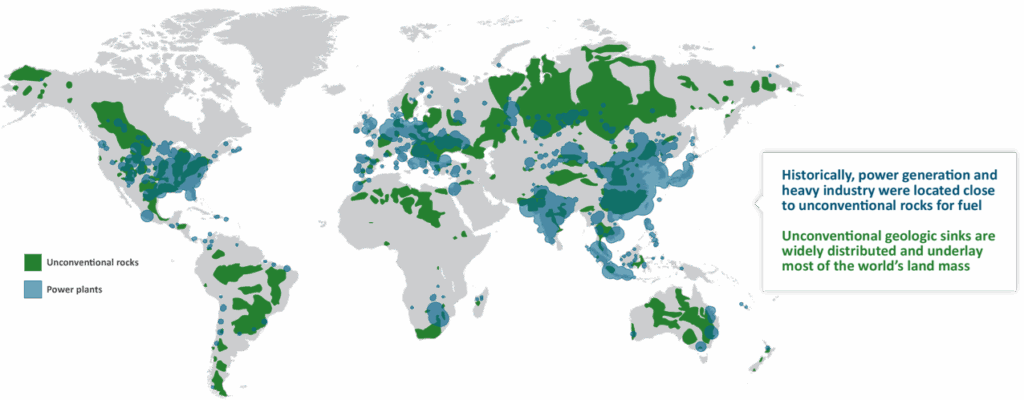
Pope: CGC captures CO₂, scrubs it a bit when it needs it, and injects it into un-mineable coal seams, using what’s called geo-sequestration, where the coal filters out the CO2 for us and holds it permanently. Un-mineable coal seams are secure, abundant, and leverage existing infrastructure in overlooked places. Our costs are typically $40–50 per ton of CO2 for post-combustion sources. That’s a third of what other solutions cost. And the monitoring tech we use, adapted from WellDog, is critical for proving it’s working safely.
Eccles: Sounds to me that that this isn’t a tech problem, it’s a cost and willpower problem.
Pope: Exactly. We have the technology to stop emissions and remove CO₂. We’ve had it for a while. We just haven’t chosen to use it because the costs are considered by many to be too high.
It would cost about $1.2 trillion to avoid emitting 10 billion tons of CO2 each year, to solve what many people consider an existential crisis facing the entire planet. That’s only about 1% of global GDP. Would we spend 1% of our family’s income to protect the other 99%? In a heartbeat.
But we face many challenges, and people need to decide whether this one is important enough to pay that much to address it.
Or we can find a way to address it that’s cheaper, so we don’t have to pay so much, making that decision easier. With the approach we’ve developed, it probably costs about $500 billion to avoid emitting that 10 billion tons each year. This reduces the friction of the decision. That’s what Carbon GeoCapture is trying to do. Reduce that friction.
What Success Looks Like
Eccles: So, the economics are there. But scaling is the next big hurdle. If CGC succeeds, what does the next five years look like?
Pope: Execution is key. We already have validation. Large engineering firms and industrials have vetted the tech. We’re scaling, and we’re executing now. Projects are advancing, contracts are closing. But we are working within large company environments where progress can sometimes require quite a bit of time, especially for something new like carbon capture and sequestration.
So far, in order to ensure this company’s critical mission is protected, we’ve bootstrapped for years, sometimes under fairly difficult conditions. We can see that taking in more capital would reduce risk and accelerate scale up significantly. But we also know that taking in the wrong capital comes with risks, as we’ve already experienced repeatedly at WellDog. Balancing those risks is a constant challenge.
If we can navigate that effectively and bring larger capital into our company and projects, in five years I expect we could have dozens of large-scale profitable carbon sequestration projects operating and putting a lot of CO2 into the ground.
If we continue to bootstrap, we’ll probably still have at least a few projects operating by then.
Eccles: When we first met, I asked you why you weren’t more visible for the great work you’re doing. Hey, I was pitching you, after all! You said this isn’t about you, and I respect that. But people often want a story to follow. They want a face to believe in.
Pope: I get that. But I’ve seen too many solutions judged by the people attached to them, not the merits. I’ve filled the charismatic founder role before. It gets attention, but it’s fragile and risky for the business. We want this solution to outlive and outperform any individual, including me. That’s why we built it quietly. And that’s why we’re only now starting to tell the story.
We do not promote. We have rarely talked publicly about what we’re doing. Because once the value proposition is out there, someone will usually claim the solution has a fatal flaw – sometimes for ideological reasons, not technical ones. And even if those claims are baseless, it slows adoption. We can’t afford to go slowly.
Eccles: So you stayed quiet on purpose. I get that. But just let me say I’m humbled that you’d be willing to do such an extensive interview with me.
Pope: We stayed quiet for years. Now, though, our projects are maturing. They need social license. We picked you for this conversation because we know you’re a rational actor. It’s time to begin talking, selectively, to support this solution.
Eccles: Hey, thanks for the compliment. I’m going to make sure my wife reads this interview!
Pope: Good luck with that!
Eccles: I’ll let you know! What’s your biggest concern now?
Pope: That we’ll collectively wait too long to address climate change. That the ideological debate will discourage pragmatic progress. That we’ll miss the window to scale what we have that works now. I mean, look – climate models already say we’re losing 99% of coral reefs, even if we stop emissions now. Many impacts are already baked in. And yet we’re still debating whether to go all in.
The Common Pool Challenge
Eccles: How do you think about this problem? Because all that CO2 just ends up in the atmosphere, so you kind of have sort of a free rider problem, right?
Pope: Yes, the heart of the challenge is that this is a common pool resource problem. I think it’s our ability to work collectively that’s going to determine whether we rise to this challenge, and our many other challenges, or if we continue to do what’s best only for ourselves.
Eccles: And what’s your view of the political landscape right now? You’ve got folks on the left pushing divestment, and people on the right warming up to carbon capture, often more pragmatically.
Pope: Protecting our environmental home while producing the resources needed to realize human potential is challenging. We’re fortunate that in this case we can do both.
Many coal seams hold lots of natural gas but can hold five to ten times more CO2. We can let that natural gas flow out, if we choose, and use it to produce lower carbon power. And we can remove massive amounts of CO2 from the ecosystem while we’re doing it.
Eccles: How poetic! Humanity has spent two hundred years taking carbon out of coal seams, and now will spend the next 100 years putting it back where it came from, using many of the same techniques. Are you optimistic?
Pope: I’m not pessimistic. I trust the process. I trust that we will show up, and we’ll do what we can, and things will turn out bad in some ways. And they’ll turn out good in other ways.
The ideological debate around climate change and accountability is intense and just getting started. But more and more people are saying “hey, the house is on fire, can we please pause the debate and just put it out?” I trust that pragmatic perspective will grow.
Eccles: Thanks again for your time, John, and please let me know if I can ever help in any way, like introductions to people with capital.
Pope: I appreciate that, Bob, and we’ll definitely keep in touch.
Robert G. Eccles of Saïd Business School, University of Oxford is the author of a number of books on integrated reporting, sustainability and the role of business in society. His focus is on sustainability from both a company and investor perspective. Professor Eccles is also involved in a variety of initiatives to embed environmental, social, and governance (ESG) issues in real world decision making. One of these is the Sustainability Accounting Standards Board (SASB), of which he was the founding chairman. In 2018, Professor Eccles was selected by Barron’s as one of the top 20 influencers on ESG investing.
SUBSCRIBE TO OUR NEWSLETTER
Subscribe our newsletter to receive the latest news, articles and exclusive podcasts every week